Essen (D) * 2023 * PACT Zollverein * 3 Weeks
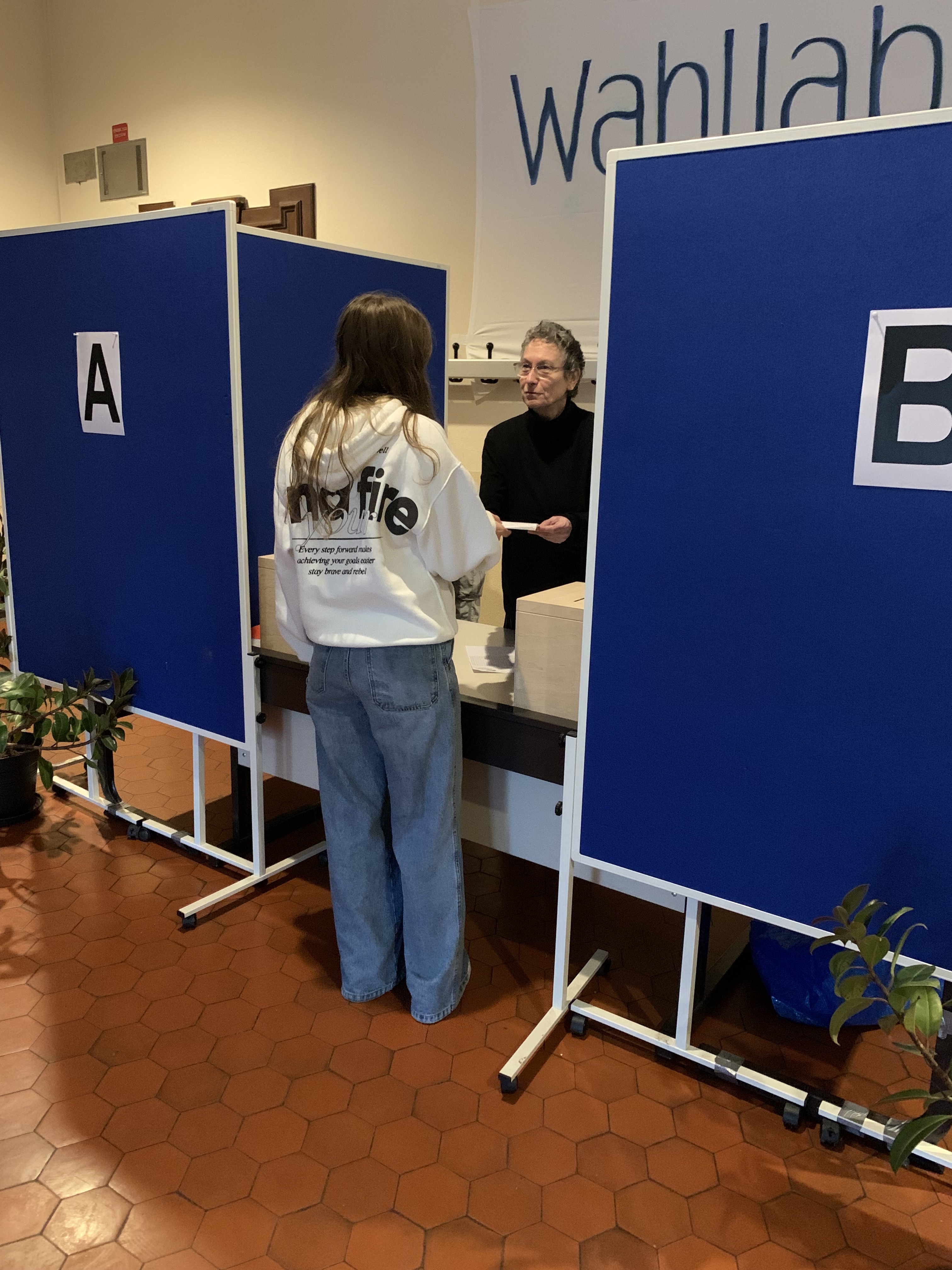
WochenKlausur set up an “electoral laboratory” at Carl Humann Gymnasium for the “spot on governance” residency program offered by PACT Zollverein in Essen.
Would political elections lead to different results if it were possible to vote against a party rather than for it as usual? After all, many people often already know what they don't want long before they know what they do want.
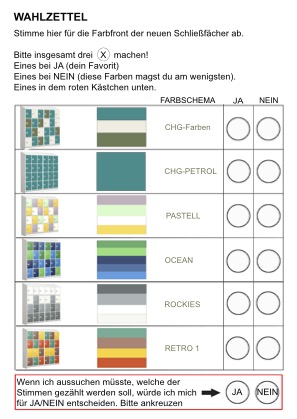
For an experiment on the results of elections using different methods, a cooperating school was first sought. In the end, 251 pupils from 10 grade onwards at Carl-Human-High School took part. On their ballot paper, they were not asked to choose a party from three different options, but to choose the design of new lockers from six color combinations.
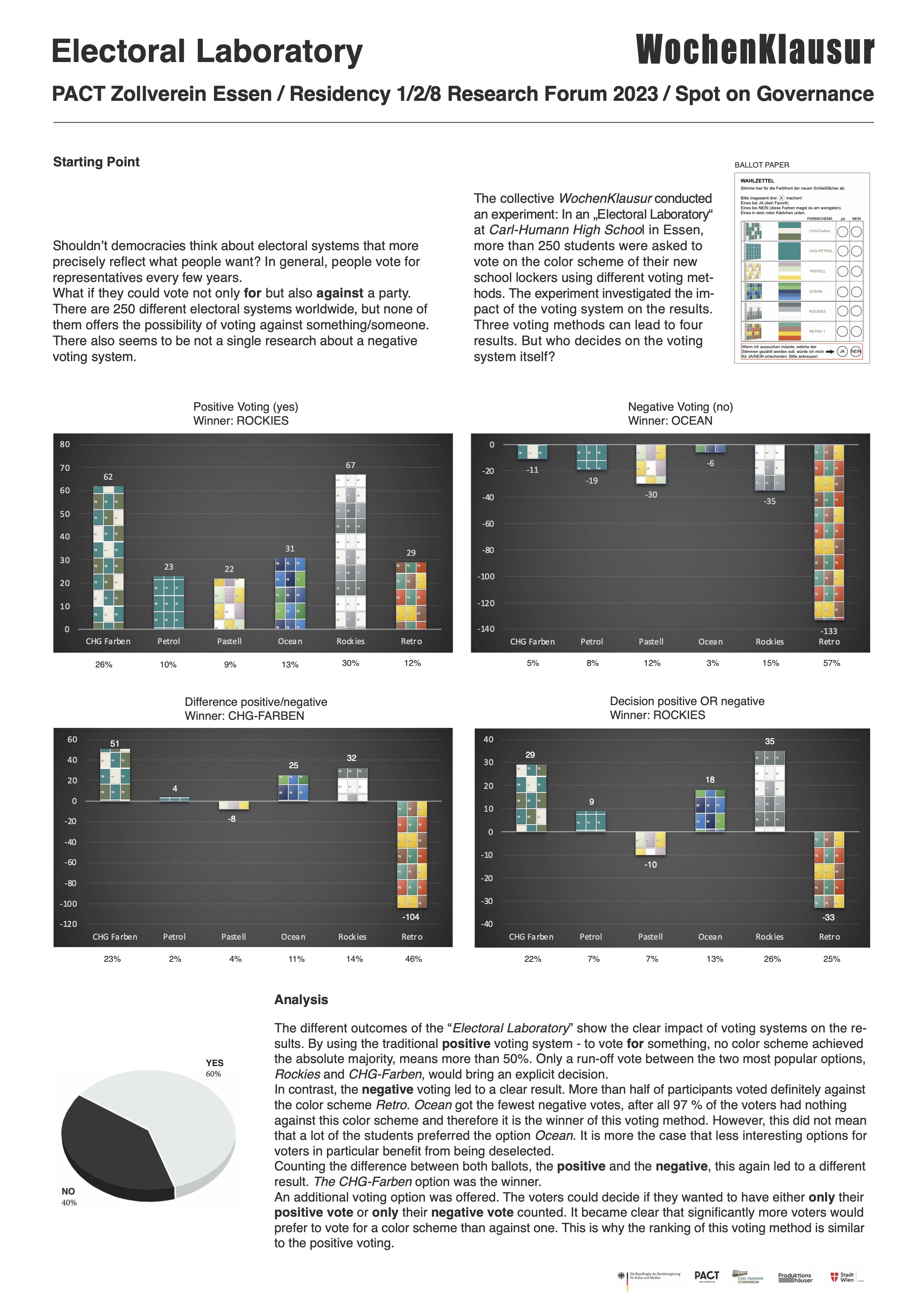
Four results were derived from the information provided:
1. when a favorite color scheme was chosen using the traditional method, most were in favor of the proposal called Rockies.
2) In the negative vote, the Ocean color combination had the fewest votes against it.
3. when the votes against were subtracted from the votes for, the CHG color combination came out on top.
4. Finally, participants were asked to indicate whether—if they could decide for themselves—they would prefer to vote positively or negatively.
This produced a fourth result: the positive votes from method (1) were counted for those who preferred to vote positively, and the negative votes from method (2) were counted for those who preferred to vote negatively. Under this combined approach, the Rockies color scheme again emerged as the winner. Apparently, because 60 percent of participants preferred to vote for something rather than against it, this outcome closely resembled that of the traditional voting method (1).
The experiment clearly demonstrated that election results depend much more heavily on the voting rules than is commonly assumed. Now, school administrators must decide: What will the lockers look like? Which system is binding? Which result is valid? That, too, could be put to a vote—
But then again, under which method?
Farsam Dalae, Lukas Kasper, Julia Riederer, Martina Reuter, Wolfgang Zinggl
Farsam Dalae, Lukas Kasper, Julia Riederer, Martina Reuter, Wolfgang Zinggl